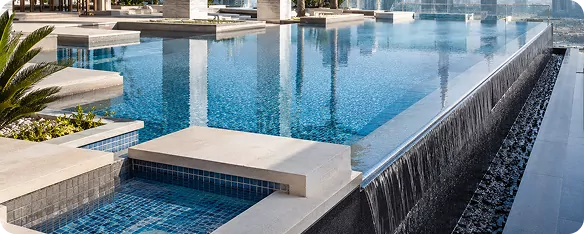


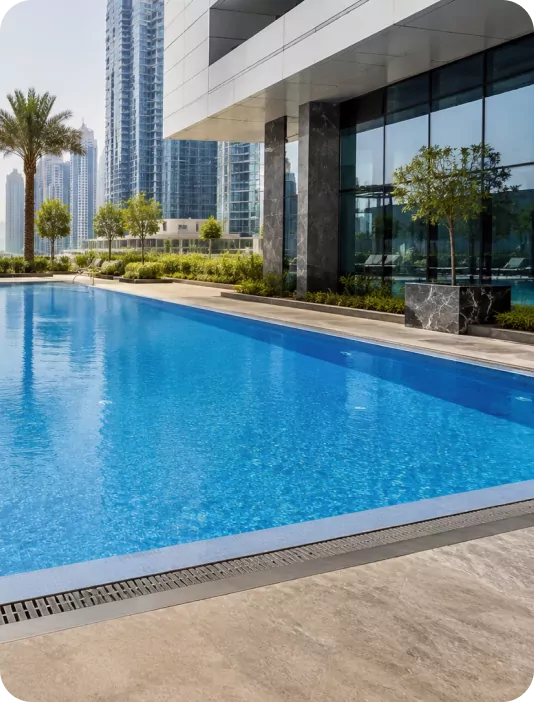
Hotel pool
Area: concrete shell + overflow channel
Solution: Chemical-resistant polyurea, water-contact certified, 3 mm
Result: Seamless membrane installed; project delivered according to specification
Spray-applied seamless waterproofing membrane for commercial, industrial and residential structures. Covers flat roofs, swimming pools, foundations, terraces and underground car parks.
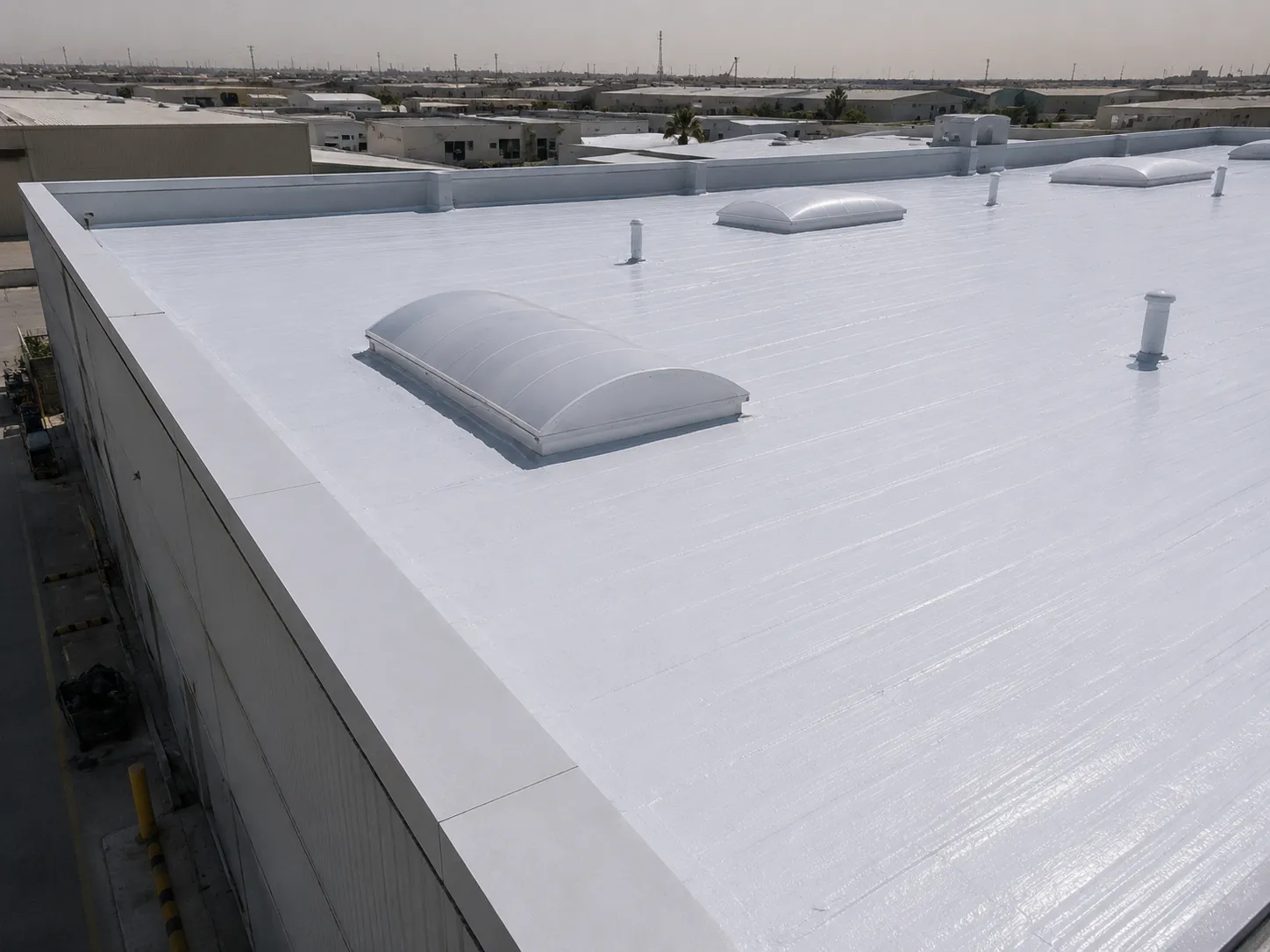
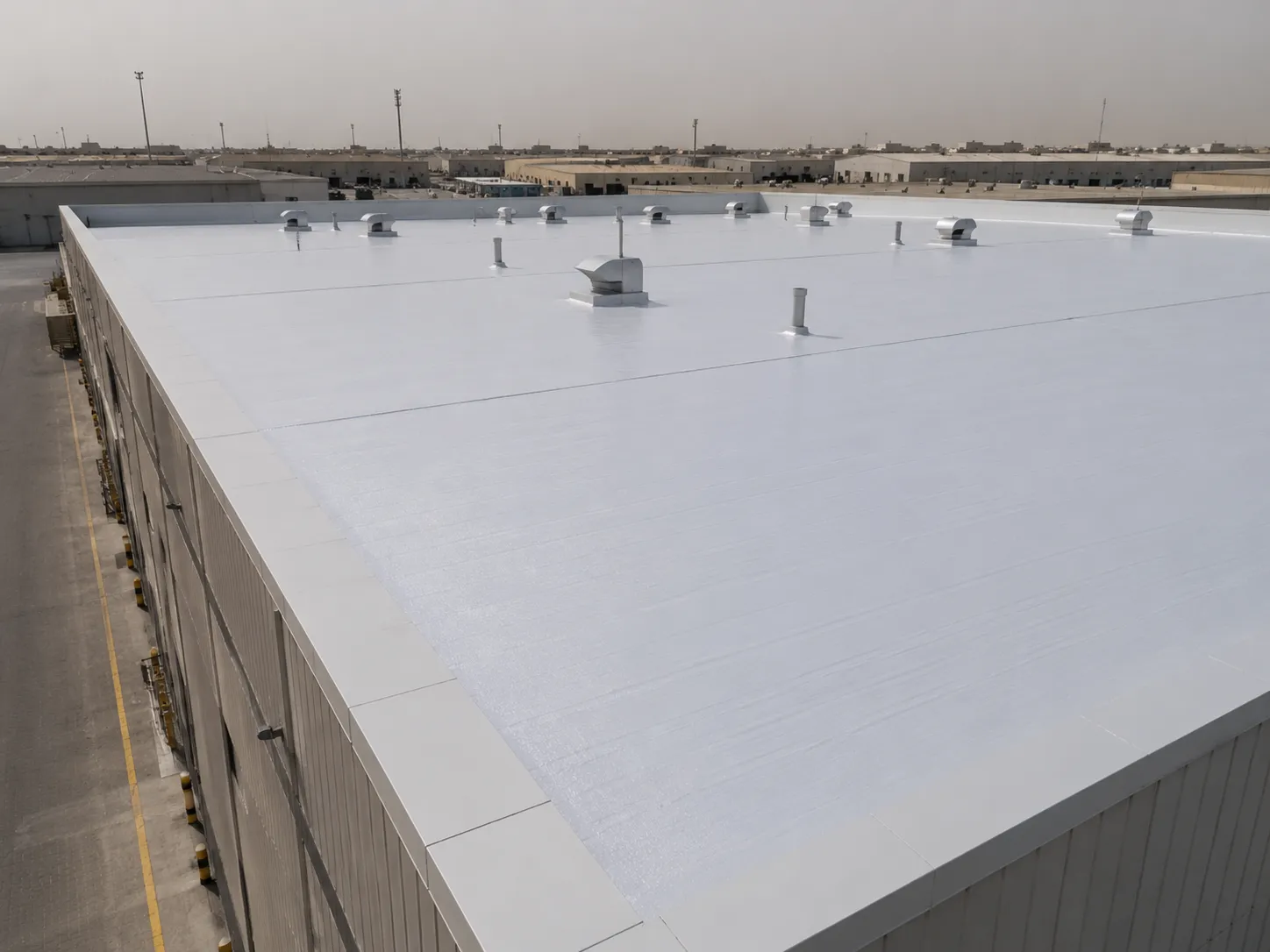
Spray polyurethane foam reduces overheating of structures and indoor spaces, stabilising internal temperatures and lowering the load on air conditioning systems.
Seamless membrane — no seams, no overlaps, no weak joints
Fast cure: surface ready within minutes after application
Thickness: 2–4 mm applied in one system
Elastic: withstands structural movement and thermal cycling
SERVICE LIFE: UP TO 20–30 YEARS WHEN CORRECTLY APPLIED AND MAINTAINED
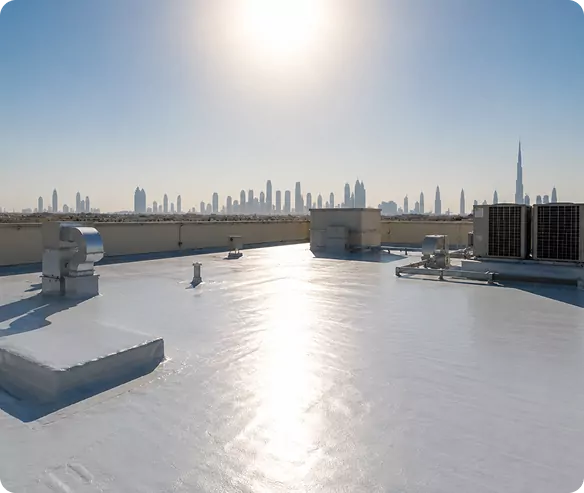
Seamless polyurea waterproofing engineered for Dubai's climate.
Polyurea waterproofing is designed to perform under Dubai's extreme climate, where constant heat, UV exposure and humidity place continuous stress on roofing systems.
Accelerates ageing of conventional waterproofing materials.
Roof structures expand and contract, stressing joints and details.
Corners, pipe entries and transitions are where most failures begin.
Water penetrates through weak points and gradually damages the structure.
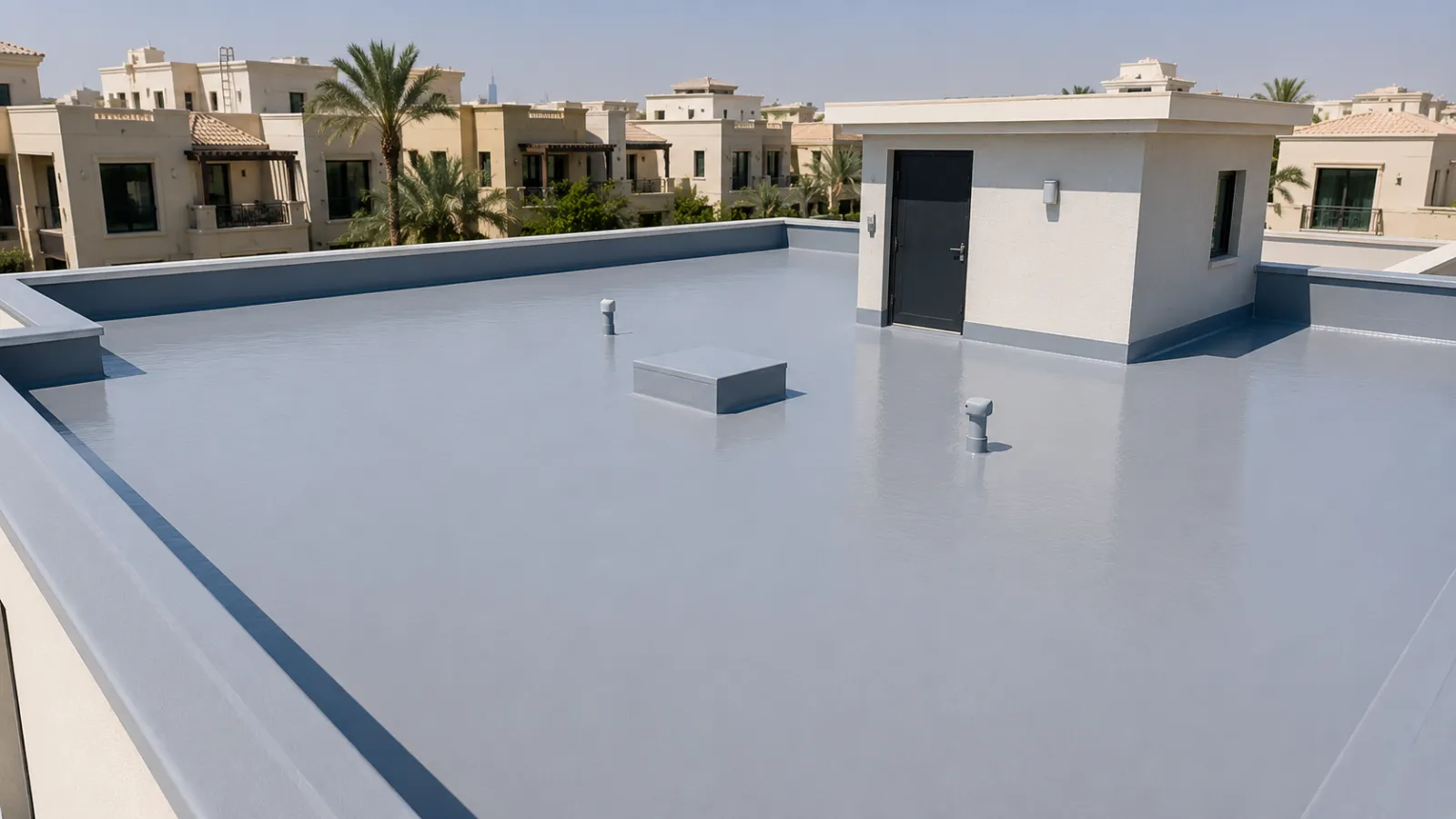
Polyurea creates a continuous waterproof layer with no joints or overlaps.
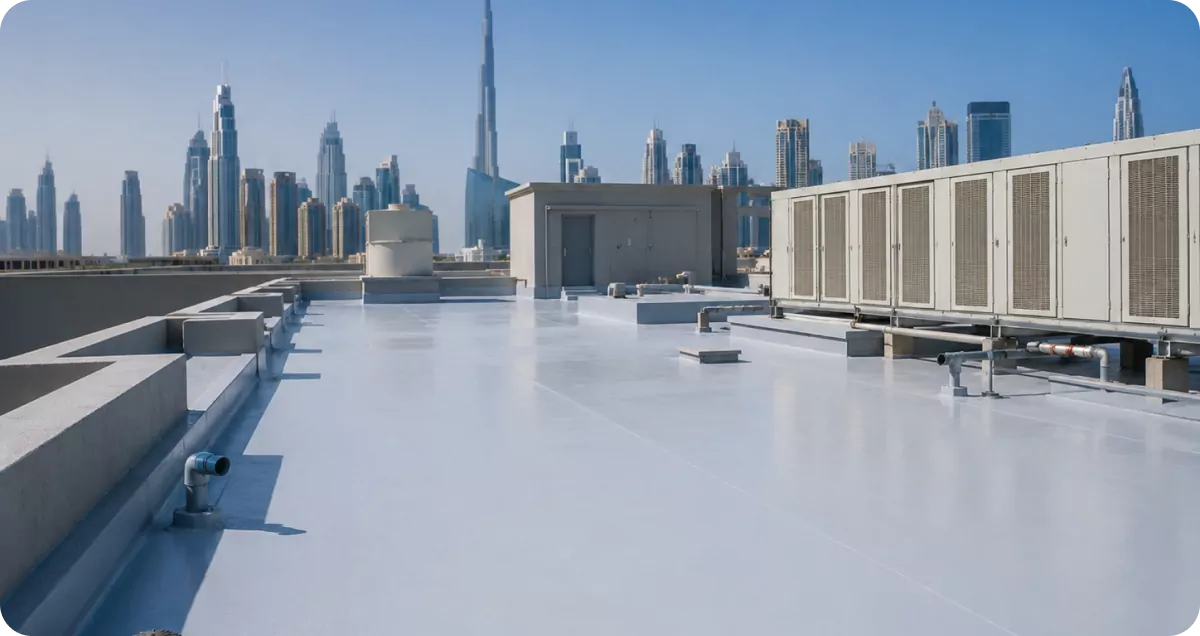
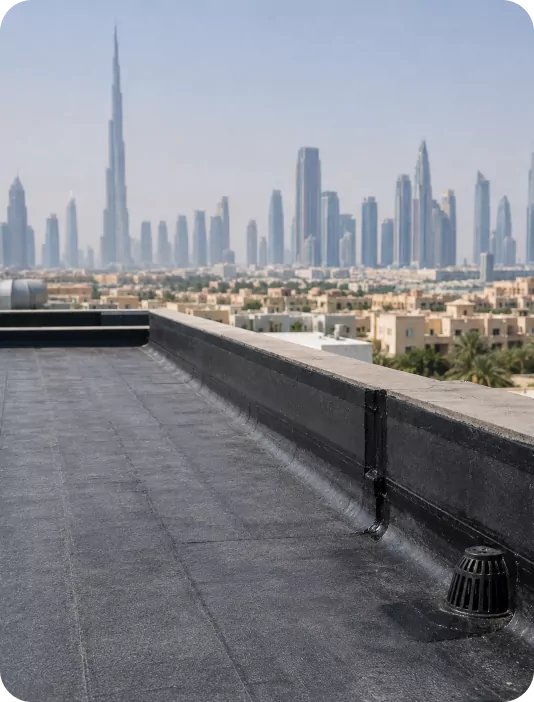
The primary application. Flat roofs, technical roofs, roof terraces and plant room areas. Seamless membrane covers the full surface including parapets, drainage points, pipe entries and equipment bases – the zones where leaks most often start. Works over concrete, metal and existing membrane surfaces after preparation. Typical scope: 500-5,000+ m².
Describe Your Project
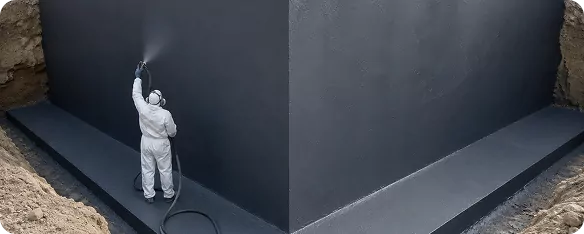
One of the strongest B2B segments in the UAE. Basement walls and slabs, underground car parks, lift pits and retaining walls. Applied to structures below grade and under hydrostatic pressure. Used on new-build and existing buildings where moisture ingress is active or at risk.
Describe Your ProjectA significant and growing segment in Dubai. Applied to private villa pools, hotel pools, residential community pools and commercial water features. Covers the concrete shell, overflow channels, pipe entries and connection points. Each system is selected and certified for continuous water contact, with chemical resistance matched to the pool's treatment type.
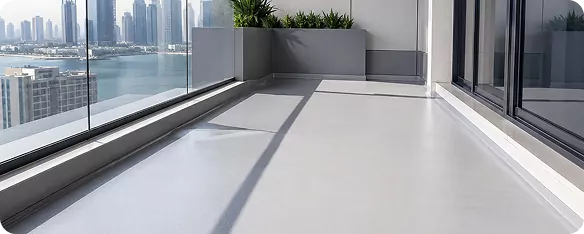
Describe Your ProjectExposed terraces with transitions between materials, wall connections, drainage slopes and surface penetrations.
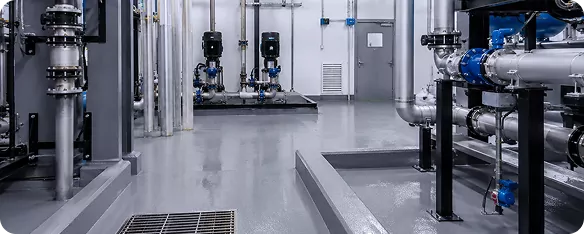
Describe Your ProjectUtility rooms, plant areas, water storage tanks, drainage channels and surfaces with regular water exposure.
Describe Your ProjectDetails determine how the system performs in operation.
Details determine how the system performs in operation.
Seamless elastic membrane covers the full surface with no joints
Thickness: 2–4 mm, fast cure — trafficable within minutes
Elastic: withstands structural movement and thermal cycling in UAE climate
The service life of waterproofing is not defined after completion — it is formed during execution.
We assess the substrate, identify risk zones and define the scope.
Polyurea, SPF or combined — matched to the structure and UAE climate conditions.
Surface preparation, detail treatment, spray application with layer thickness control.
Final inspection, material certificates and as-built documentation.
Material compliance, storage conditions and readiness are verified before work begins. The surface is cleaned, repaired, primed and prepared for adhesion.
All corners, joints, penetrations and transitions are treated individually before the main coat is applied.
Layer thickness and uniformity are monitored throughout the application process. Each stage is documented.
Coating continuity is verified. Material certificates and as-built documentation are provided on completion.
Yes, after proper surface preparation — removal of loose material, priming and repair of defects.
Yes. Water-contact certified, chemical-resistant polyurea grades are specified for pools and balancing tanks.
It is usually condensation rather than a leak. A site inspection will establish the source before any work is proposed.
Adhesion depends on it. Loose material, laitance and moisture in the substrate are the most common causes of coating failure.